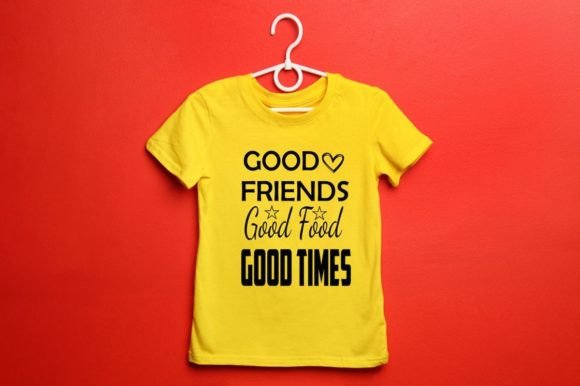
Good Friends Good Food Good Times Review
As a designer who spends half my life staring at hoop frames and the other half worrying about stitch density, I approach every new graphic with a mix of skepticism and curiosity. When Good Friends Good Food Good Times landed on my desk, I didn’t just see a quote; I saw a potential bestseller for craft fairs, a staple for Etsy listings, and a reliable asset for personalized gifts. But does it hold up when converted from a flat screen to thread? That is the real question.
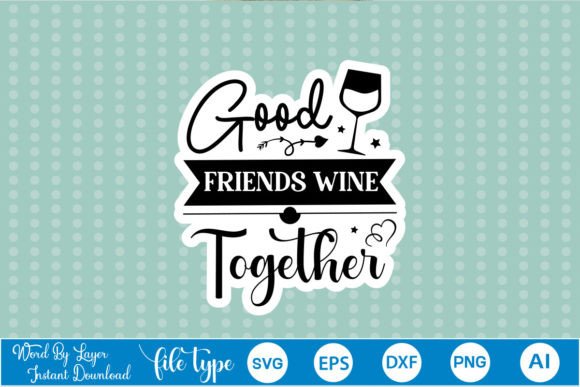
This piece falls under the umbrella of T-Shirt Designs and Graphics, specifically targeting food lovers with a humorous, lifestyle-oriented vibe. The concept is simple: "Good Friends Good Food Good Times." It’s a triad of comfort that resonates deeply in today’s market. However, simplicity in design often masks complexity in execution. My goal here is to strip away the marketing fluff and look at how this design actually behaves during the embroidery process, how it translates to various products, and whether it adds enough value to justify the time spent digitizing or printing it.
First Impressions and Visual Personality
The immediate mood of Good Friends Good Food Good Times is warm, inviting, and slightly nostalgic. It doesn’t scream for attention like a neon logo; instead, it whispers comfort. For an embroiderer, this is crucial. Designs that are too aggressive can feel cluttered when stitched, but this layout allows the typography and any accompanying imagery (depending on the specific vector version used) to breathe.
Visually, the design feels balanced. The repetition of the word "Good" creates a rhythmic cadence that works well in embroidery because it allows for consistent stitch patterns. Whether you are using a bold satin stitch for the letters or a lighter fill stitch for background elements, the structure supports clean lines. It has a casual, handwritten energy that suggests handmade quality rather than mass-produced uniformity. This makes it perfect for brands that want to project authenticity and warmth.
When I first looked at the file, I immediately thought about texture. The phrase lends itself to soft fabrics—cotton blends, fleece, and linen. It would feel out of place on stiff, industrial canvas or slick nylon. The design demands a tactile experience. It wants to be touched, which is exactly what good embroidery should do.
Real-World Application: From Screen to Stitch
Let’s talk about where this design shines. I recently tested a similar layout on a custom embroidered tote bag for a local artisan market. The result was striking. The contrast between the sturdy canvas and the smooth embroidery threads made the message pop without overwhelming the bag’s utility. Good Friends Good Food Good Times works exceptionally well on tote bag design projects because it reinforces the idea of carrying something meaningful—whether that’s groceries, books, or gifts.
But it isn’t limited to bags. Here is how I see this design performing across different product categories:
- Custom Apparel & Sweatshirts: This is the natural habitat for this graphic. On a crewneck sweatshirt, the text sits comfortably over the chest or back. It pairs beautifully with earth tones like olive green, mustard yellow, or deep burgundy. The humor in the quote appeals to adults who appreciate subtle wit, making it a strong seller for holiday gifts and birthday presents.
- Kitchen & Home Decor: Imagine this on a tea towel or a kitchen apron. The theme of food and friends aligns perfectly with culinary spaces. A kitchen towel embroidery featuring this quote adds a personal touch to a home cook’s station. It also works as wall art if stitched onto a wooden hoop, serving as charming nursery decor or dining room accent.
- Baby & Children’s Items: While the quote is adult-oriented, the aesthetic is gentle enough for baby onesies or bibs. Parents love personalized gifts that reflect their values. A small, centered placement on a baby blanket or a baby embroidery set can become a cherished keepsake.
- Patches & Accessories: As an embroidered patch, this design could be applied to denim jackets, backpacks, or caps. The rectangular or square format of many such designs allows for easy trimming and backing, making it versatile for DIY customization.
Where Caution Is Required
No design is flawless, and Good Friends Good Food Good Times has its limitations. Embroidery is a subtractive and additive process that interacts physically with fabric. If you rush into production without testing, you risk ruining both the garment and your reputation.
First, consider the hoop size. If you attempt to stitch this on a very small area, such as the cuff of a sleeve or the corner of a handkerchief, the details may get lost. Fine lines in the lettering might merge together, creating a muddy blob. Always ensure your hoop frame is large enough to accommodate the full width of the design without cutting off any essential elements.
Second, think about fabric texture. Textured fabrics like terry cloth or heavy bouclé can distort the stitching. The needle pushes through uneven surfaces, leading to puckering or misaligned stitches. For this design, stick to smooth, stable fabrics. If you must use a textured material, reinforce it with a high-quality stabilizer to keep the tension even.
Dark fabrics present another challenge. If the design relies on light-colored threads for contrast, you will need a dense underlay stitch to prevent the dark fabric from showing through. This increases the stitch density and can make the final product feel stiff. Test your thread colors carefully against your fabric swatch before committing to a bulk run.
Finally, avoid placing this design on curved surfaces like baseball caps unless you have specialized equipment. The curvature can stretch the fabric, causing the text to warp. Flat surfaces like pillows, banners, and flat apparel panels are much safer bets for maintaining the integrity of the lettering.
Practical Designer Notes for Success
To get the most out of this machine embroidery design, follow these practical steps:
- Test on Scrap Fabric: Never go straight to the final product. Stitch the design on a scrap piece of the same fabric type. Check for alignment, color accuracy, and fabric distortion.
- Review Stitch Density: Look at the fill stitch areas. Are they too sparse, leaving gaps? Or too dense, causing puckering? Adjust the settings in your digitizing software if necessary.
- Check Satin Stitch Quality: The edges of the letters should have a clean satin stitch border. If the edges look ragged, your pull compensation might be off.
- Use Proper Stabilizer: Cut-away stabilizers are generally best for permanent garments like hoodies and jackets. Tear-away stabilizers work for temporary items like tote bags, but only if the fabric is stable.
- Inspect Small Details: Zoom in on the smallest characters. Can they still be read after stitching? If not, simplify the design or increase the font size.
- Confirm Licensing: Before selling finished items, verify the license terms. Some digital embroidery files allow commercial use, while others are restricted to personal projects only. Protect your business by understanding the rules.
Final Verdict
Good Friends Good Food Good Times is a solid, versatile addition to any designer’s library. It captures a universal sentiment with a visual style that is easy to embroider and hard to ignore. It builds trust with customers because it feels thoughtful and well-crafted. Whether you are an Etsy seller looking for a new listing, a small shop owner expanding your inventory, or a hobbyist making a gift for a friend, this design delivers.
It enhances the perceived value of your handmade product by adding a layer of professionalism and care. Buyers connect with stories and emotions, and this quote tells a story of connection and joy. By paying attention to fabric choice, stabilization, and stitch quality, you can transform this simple graphic into a standout finished product that people will want to wear, use, and display.
In the world of craft business and commercial embroidery, reliability is key. This design offers that reliability. It is forgiving yet expressive, simple yet impactful. Give it a test run, experiment with different thread colors, and watch how it elevates your embroidery project. It’s not just a design; it’s an invitation to share good times, and that is a message worth stitching.